| Join | Official Historian | City of Stamford | Blog | About Us | |
| Jewish Historical Society | Civil War Roundtable | Contact Us | |
 |
|
|
The Stamford Historical Society PresentsPride and Patriotism: Stamford’s Role in World War II
|
||||||||||||||||||||||||||
| This exhibit is made possible through the generous support of: The F. A. Bartlett Tree Expert Company Connecticut Light & Power Gen Re Global Reinsurance Xerox Corporation The Advocate/Greenwich Time Creative Framing & Gallery Jane C. Flounders The society will expand the World War II exhibit’s archives and oral history program as long as veterans are interested in participating. Those who want to share their memories can call the society at (203) 329-1183 or e-mail to to history@stamfordhistory.org |
Introduction & Acknowledgements
by
Thomas A. Zoubek, Ph.D., Executive Director, Stamford Historical Society
When the Second World War started, Stamford was a community of 60,000 people from a variety of different backgrounds and ethnicities. Stamford itself had become a manufacturing community dominated by the major firms of Yale & Towne, Pitney-Bowes, Machlett Laboratories, American Cyanamid, and Luders Marine Construction, to mention but a few. With the coming of the war some 10,000 Stamfordites were enlisted in various branches of service, while others worked on the homefront to support the war. Local firms converted their factory works for the production of implements, machines, and ships needed for the war effort.
While it is impossible to tell the entire story of the war, this exhibit is dedicated to illustrating and honoring those men and women who contributed to the winning of the war, both at home and in the field. Their contributions helped secure the future of not only this nation, but also that of many others across the world, and for this they deserve our everlasting gratitude.
“Pride and Patriotism: Stamford’s Role in World War II” takes visitors to the frontlines and along the home front in Stamford. The most recent Society exhibit, Portrait of a Family: Stamford through the Legacy of the Davenports, sought to illustrate the history of Stamford through the efforts of one family; in a similar way, this exhibit tells the story of Stamford’s experience during World War II through the lives of individuals who participated abroad as well as in the war effort at home. The individual experiences give exhibit viewers a more personal, intimate experience and appreciation of how the war affected people’s lives directly.
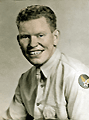
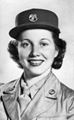
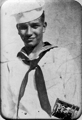
The exhibit includes exclusive, first-person accounts from veterans who are Stamford residents. There are representatives from all branches of the services as well as women’s divisions: the WACS and the WAVES. Stamford veterans were found in all the theaters of the war.
In addition, “Pride and Patriotism” uses loaned weapons, uniforms, photographs, and artifacts to tell veterans’ stories. Loaned or society-owned items and objects trace the central role that local companies played in war efforts and reflect daily home-front life.
A poster gallery, drawn from the Society’s World War II-era collection, offers visitors a snapshot of the U.S. Government’s efforts to attract and encourage public support for the money, material resources, labor, and day-to-day sacrifices needed for a successful war effort.
Syndicated cartoonist Mort Walker, creator of “Beetle Bailey”and other popular comic strips, is honorary chair of the exhibit. We are grateful for his permission to reproduce images from his 1945/46 scrapbook for both the exhibit and this online version, in addition to the loan of other artifacts. He also drew the "Kilroy was here" cartoon for us which is shown on all pages. Mr. Walker was the keynote speaker on opening-day.
The online version of the exhibit strives to present not only the veterans’ stories beyond the excerpts shown in the galleries, but also to display images of objects they lent us for the exhibit – or in some cases donated to the Society – as well as their photos. The battle pages include links to related Internet sites for the more curious. We have added several interviews and biographies, relevant to displays and other references in the exhibit, from the book “An American Town Goes To War” by Tony Pavia, 1995, with the author’s kind permission.
 |
 |
 |
 |
 |
 |
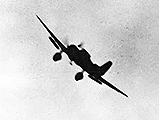
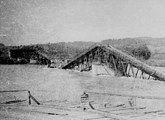
Stamford’s men served in every branch of the services: Army, Navy, Marines, Air Corps, and Coast Guard. Women from Stamford also participated in non-combat support roles through the WAVES and WAACS/WACS. Stamford’s troops served in both theatres of the war. Veterans whose stories appear in the gallery witnessed Pearl Harbor, D-Day, the battles of Iwo Jima, Okinawa, of the Bulge, and more. Their stories provide a more personal and poignant view of the Second World War.
The Attack at Pearl Harbor
Europe
While Germany was the ultimate target of the campaign in the west, the decision to invade Europe was postponed despite Stalin’s continued pressing for the opening of a second front in Europe. The decision was made to first strike in Africa, where it was believed the French would quickly turn to the Allied side. This was followed by the invasion of Italy. Churchill argued that an invasion from the south could strike as far as Vienna, bringing a quick close to the war and keeping Soviet forces from seizing control of much of Europe. In 1944, however, the American High Command, which had always been committed to opening a second front in France, from the Channel side, initiated Operation Overlord, the Normandy Invasion, which began the drive to Berlin.
| Operation Torch and the Invasion of North Africa The Battle of Normandy The Battle of the Bulge |
Not yet included The Invasion of Sicily The Battles of Anzio, Monte Cassino, and the Gothic Line |
The Pacific
In March 1942 the Joints Chiefs of Staff established two U.S. military commands for the Pacific campaign. The Southwest Pacific Area was to be headed by General Douglas MacArthur and was to focus of driving the Japanese out of the Solomons, Bismarck Archipelago, New Guinea and ultimately the Philippines. The Central Pacific Ocean Area was to be under the command of Admiral Chester W. Nimitz and was to be a campaign of island hopping, starting in the Gilbert Islands and ultimately ending in the Ryukyuk Islands, south of Japan, at Okinawa. This campaign of island hopping also provided bases for B-29s to strike at the Japanese heartland, culminating in the dropping of the atomic bombs at Hiroshima and Nagasaki.
WWII Maps from Center for Military History Brochures
The Veterans
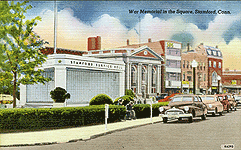 Stamford Service Rolls |
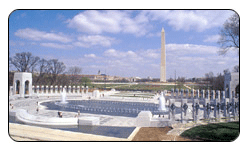 National World War II Memorial |
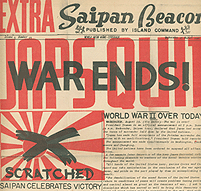 Opening Day
Poster Gallery
Exhibit Photos
WWII Military Vehicles (2006 Antique Car Event)
Acknowledgements
The Stamford Historical Society would like to acknowledge the following, without whose support this exhibit would not have been possible:
| Corporate Supporters The F. A. Bartlett Tree Expert Company Connecticut Light & Power Gen Re Global Reinsurance Xerox Corporation
Local Businesses |
Other Jane C. Flounders Institutional Loans to the Exhibit |
Honorary Chairman & Opening Event Speaker
Mort Walker
Curators
Ron Marcus – Stamford’s Homefront in World War II
Dr. Thomas A. Zoubek – Stamford’s Troops in the Field
Exhibit Committee and Volunteers
| Grace Bounty Margaret Bowen Laurel Cooley Adele Domagala Suzanne Emmens |
Jane Flounders Irma Geher Irene Hahn Dave Kush Ron Marcus |
Cort Mehl Haideh Molavi Jennifer Peters Andi Principe Bob Rodwin |
Greg Serafina Claudia Steers Stuart Webster Dr. Thomas A. Zoubek Frank Zurzola |
The Society would especially like to thank those veterans who were generous in their donations of time and loans of material to the Society
| Robert Arata Eleanor Brinkerhoff Peter Canzano George Cartsounis Ralph Chamberlain Leonard Cohn James Fox Rodney Gibson Ted Guzda |
Lewis Jackson Jane Buckley Jackson Morton Johnson Pobie Johnston William Kesnick Edward Korn Elwood Lichak Robert McDonald |
Cort Mehl (for his father Cortland Mehl) Nathan Norkin Jack Palmer Roger Preu Benjamin Reed George ReissJulian Reitman Dan Roberts |
Bob Rodwin William Rudman James Santangelo Irving Slifkin Mort Walker Murray Weingrad Walter Wheeler Frank Zurzola |
| Thanks to Dan Burke and Dan Hanley for their loan of photographic material on their fathers and other Stamford relatives. | |||
The Society would also like to acknowledge the support of the following organizations in helping to put the exhibit together
 The American Foreign Legion
The Jewish War Veterans
The Marine Association
The Stamford Senior Mens Association
The Veterans of Foreign Wars, Springdale Post