The Stamford Historical Society Presents
Stamford's
Civil War: At Home and in the Field
a 2003 Exhibit and more
The Sanitary Commission
On June 9, 1861, by order
of the Secretary of War, approved by President Abraham Lincoln, the Sanitary
Commission was authorized,
to continue for the duration of the war. Henry W. Bellows, D.D., pastor of
a New York City Unitarian church, became its first president. Frederick Law
Olmstead
was named Executive Secretary and William A Hammond, Surgeon General. The primary
objectives of the Commission were to collect supplies, support soldiers' homes,
transport the sick, supply
fresh food, and to provide battlefield services and relief for discharged
soldiers. Their aid extended to the protection of dependent families and
help in solving problems with pension claims and collecting soldiers' wages.
The Commission attempted to do whatever would improve life for soldiers
which the government was unable to do. They also inspected hospitals and almost
incidentally put together a hospital directory.
Olmstead was in charge of the Commission's
Hospital Transport Service. In this capacity he was responsible for the emergency
effort that transported sick and wounded soldiers to hospitals in northern
cities. Agents of the Commission were on hand to direct the walking wounded
to trains; wagon transport moved those unable to walk. Often the seriously
wounded were sent to such hospitals wrapped in a blanket, having lost clothing
and all personal belongings.
When they arrived at northern hospitals, help
was scarce. No provision was made for issuing clothing. Basic food was served
but there was always a need for milk and fresh vegetables. Nearby localities
provided these needs, through the Commission, as well as arranging for clothing
and medical supplies, usually in short supply.
Prominent physicians gave up their practices
for various periods of time to serve at these hospitals. The Commission served
sick and wounded soldiers by providing temporary lodging near railway stations,
furnishing paper and stamps, and maintaining convalescent camps. Commission
members served without pay. Hired field inspectors, nurses, cooks, and teamsters
received small salaries. All efforts were financed by sanitary fairs and
donations.
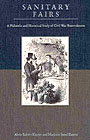 Sanitary Fairs: A Philatelic and Historical Study of Civil War Benevolences
Alvin Robert Kantor, Marjorie S. Kantor
Sf Pub; August 1992
ISBN: 0963260308
Civil War Medicine
The Stamford Ladies Soldiers' Aid
Society
